

What is Hazardous Waste?
Hazardous waste refers to solid waste with hazardous characteristics that are included in the national hazardous waste directory or identified according to the hazardous waste identification standards and identification methods stipulated by the state。
Solid waste refers to the production of solid waste、Solid states that have lost their original use value or have not lost their use value but have been abandoned or abandoned in life and other activities、Semi-solid and gaseous articles placed in containers、material as well as legal、Items that are included in solid waste management as stipulated by administrative regulations、substance。The identification of solid waste from non-solid waste is shown in the figure below。
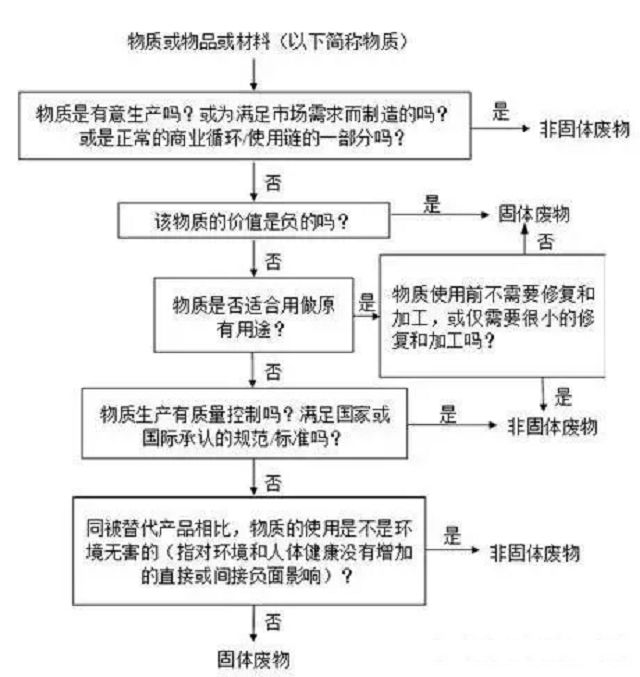
According to the characteristics of the contamination,Solid waste can be divided into general solid waste and hazardous waste。The main source of general solid waste is general industrial solid waste。
General industrial solid waste refers to industrial solid waste that has not been included in the National Hazardous Waste List or is judged not to have hazardous characteristics according to the identification standards and methods prescribed by the state。General industrial solid waste is further divided into the first category of general industrial solid waste and the second category of general industrial solid waste。
Category IGeneral industrial solid waste refers to the method of toxic leaching of solid waste in accordance with the "Solid Waste Leaching Toxicity Leaching Method(GB5086)》Prescribed method for leaching test and obtained in leaching solution,The concentration of any kind of pollutant does not exceed the "Comprehensive Sewage Discharge Standard".(GB8978)》Maximum allowable emission concentration,and general industrial solid waste with a pH value in the range of 6 to 9。
Category IIGeneral industrial solid waste refers to the method of toxic leaching of solid waste in accordance with the "Solid Waste Leaching Toxicity Leaching Method(GB5086)》Prescribed method for leaching test and obtained in leaching solution,The concentration of one or more pollutants exceeds the "Comprehensive Sewage Discharge Standard".(GB8978)》Maximum allowable emission concentration,Or the pH is 2-6、9-12.5General industrial solid waste within the scope。
Hazardous waste refers to solid waste with hazardous characteristics that are included in the national hazardous waste directory or identified according to the hazardous waste identification standards and identification methods stipulated by the state。The identification of hazardous waste from general solid waste is shown in the figure below。
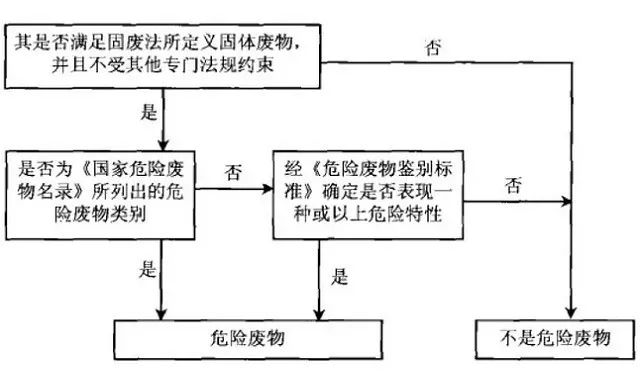
Scope of hazardous waste
1. Included in the national hazardous waste list,It mainly includes the following categories。
-
Waste:Chemical reaction wastes,Medical and pharmaceutical waste,Non-ferrous metal waste,Asbestos waste,Waste activated carbon,Surface treatment waste。
-
Liquid waste:Chemical waste liquids,Spent acid,Waste lye,Heavy metal waste liquid,Waste oil、Waste tar。
-
Waste products and raw materials:Waste chemical products,Waste pharmaceutical products,Waste pesticide products,Waste battery products,Waste packaging products。
-
Sludge:Metal sludge,Chemical sludge,Pesticide sludge,Surface treatment sludge。
-
Dust:Non-ferrous metal dust,Chemical dust,Asbestos dust,Incineration of fly ash。
2. Corrosive、toxicity、Flammability、One or more dangerous characteristics such as reactivity or infectivity,Recognized by the provincial environmental protection department
3. Chemicals listed in the "Catalogue of Hazardous Chemicals" are hazardous wastes after they are discarded。
4. Medical waste is hazardous waste(Used infusion bottles are not considered medical waste)。
5. Waste drugs and packaging materials in domestic garbage,Waste pesticides、Disinfectants and packaging,Waste paint、Solvents and packaging,Waste mineral oil and packaging,Waste film、Waste photo paper,Waste fluorescent tubes,Waste thermometer、Waste blood pressure monitors,Scrap nickel-cadmium batteries、Mercury oxide batteries,Electronic hazardous waste, etc., except for the collection process,After centralized collection, it is managed as hazardous waste。
6. It is not excluded that it has dangerous characteristics,May cause harmful effects on the environment or human health,Solid and liquid wastes identified by environmental protection departments。
Hazard Identification Criteria
1.Corrosive identification:When the pH value is greater than or equal to 12.5,or less than or equal to 2.0,The waste is a corrosive hazardous waste。
2.Initial screening for acute toxicity:The lethal dose of solid oral toxicity is less than or equal to 200mg/kg,Liquid oral toxicity is less than or equal to 500mg/kg;The half lethal dose of skin contact toxicity is less than or equal to 1000mg/kg;steam、Half of the toxic smoke or dust inhalation lethal concentration is less than or equal to 10mg/L。Solid wastes that meet one of the above conditions are classified as hazardous wastes。
3.Leaching toxicity identification:Solid waste is leached in water,The content of any one of the hazardous components in the leaching solution exceeds the specified concentration limit,The solid waste can be judged to have leaching toxicity characteristics。
4. Identification of toxic substance content:The total content of any substance in the list of highly toxic substances ≥ 0.1%.;The total content of any substance in the list of toxic substances ≥ 3%.;The total content of any substance in the list of carcinogens ≥ 0.1%.;The total content of any one in the list of mutagens ≥ 0.1%.;The total content of any substance in the list of toxic substances for reproduction ≥ 0.5%.;Contains PCDDs and PCDFs ≥ 15 μg TEQ/kg。
5.Flammability identification:Liquids with a flash point temperature below 60°C;Ignition by friction or spontaneous combustion,Ignition of solid wastes that burn violently and sustainably and produce hazards;Igniteable gases。Solid waste that meets any of the above criteria,It is a flammable hazardous waste。
6.Reactivity identification:Explosive in nature;Contact with water or acid produces flammable or toxic gases;Exhaust gas oxidizers or organic peroxides。Solid waste that meets any of the above criteria,It is a reactive hazardous waste。
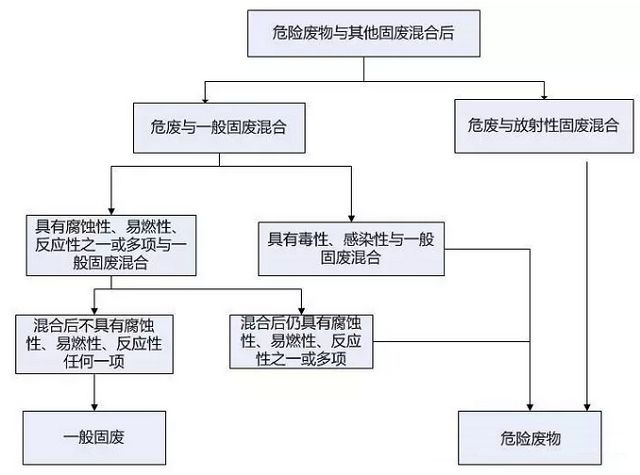
Determination of the mixture of hazardous waste and general solid waste
Toxic(Including leaching toxicity、Acute toxicity and other toxicities)and hazardous wastes with one or more hazardous characteristics, such as infectivity, mixed with other solid wastes,The mixed waste is classified as hazardous waste。Corrosive only、Flammable or reactive hazardous wastes are mixed with other solid wastes,The mixed waste passes through GB 5085.1、GB 5085.4 and GB 5085.5 Identification of those that no longer have dangerous characteristics,It is not classified as hazardous waste。Hazardous waste is mixed with radioactive waste,The mixed waste should be managed as radioactive waste。
What are the storage requirements for hazardous waste?
Storage site requirements
1、Construction of dedicated storage sites for hazardous waste;
2、The floor of the storage site is hardened and impermeable;
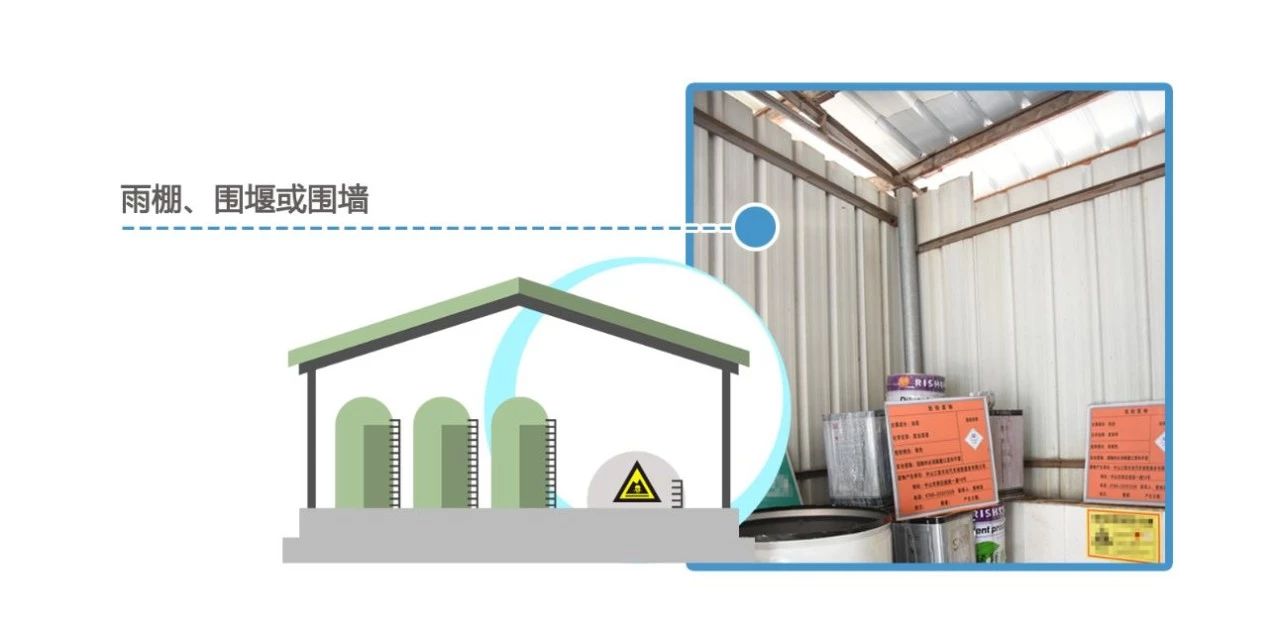
3、The premises should have a canopy、Cofferdams or fences;
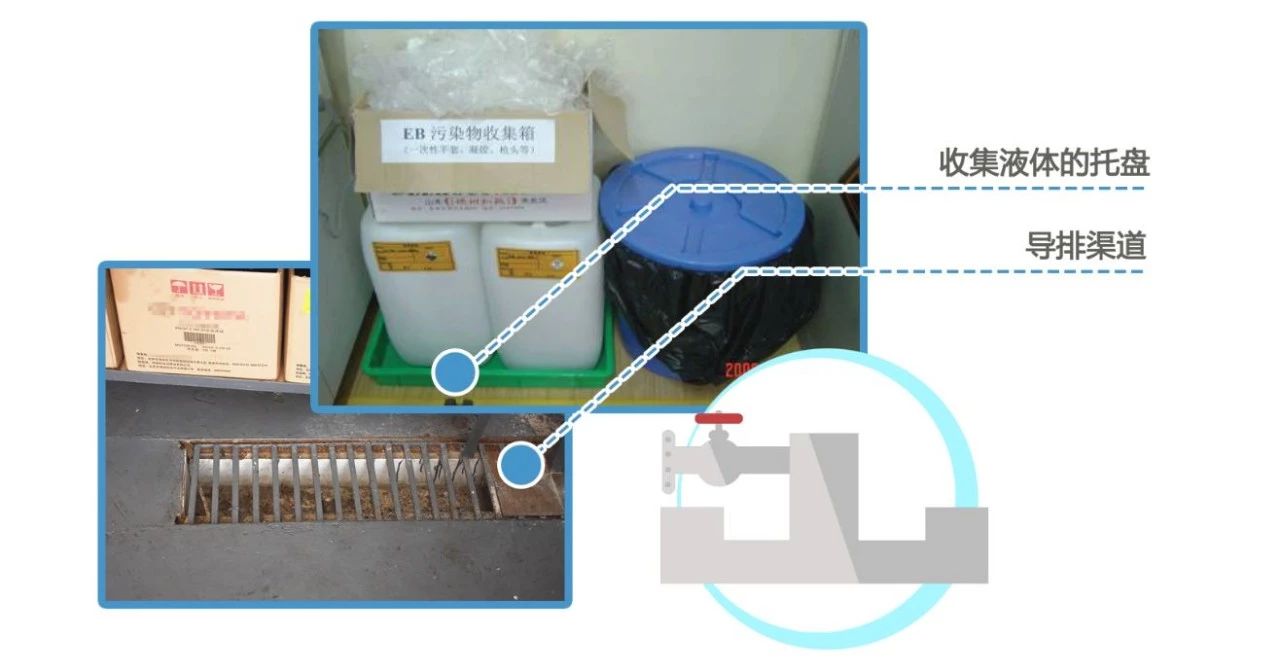
4、Set up a guide pipe or channel,Discharge flushing wastewater or leachate into a collection pond (Enterprises with very little hazardous waste generation (tens of kilograms).,Can be filled in liquid form、Containers for semi-solid hazardous waste are placed in trays capable of collecting liquids)。
Classification storage requirements
1、Hazardous waste and non-hazardous waste must be stored separately,It cannot be mixed and stacked;
2、According to the characteristics of hazardous wastes (toxicity、Corrosive、Reactivity、flammability) for classified storage;
3、It is not hydrolyzed except at room temperature and pressure、Non-volatile solid hazardous waste,Other hazardous wastes must be packed into containers;Hazardous waste that cannot be packed in containers can be packed in leak-proof plastic bags, etc;
4、Incompatible (mutually reactive) hazardous wastes cannot be mixed in the same container,Must be stored separately, And there is an isolation partition;
5、Filled with liquid、Sufficient space should be left in the container for semi-solid hazardous waste,Leave more than 100mm of space between the top of the container and the surface of the liquid;
6、Containers containing hazardous waste must be intact。
-- "Pollution Control Standards for Hazardous Waste Storage"(GB18597-2001)
1、Identification of storage sites
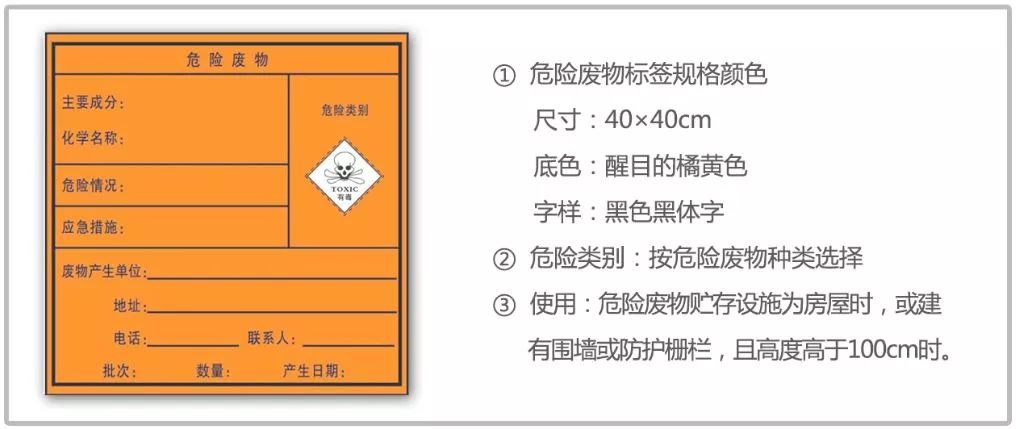
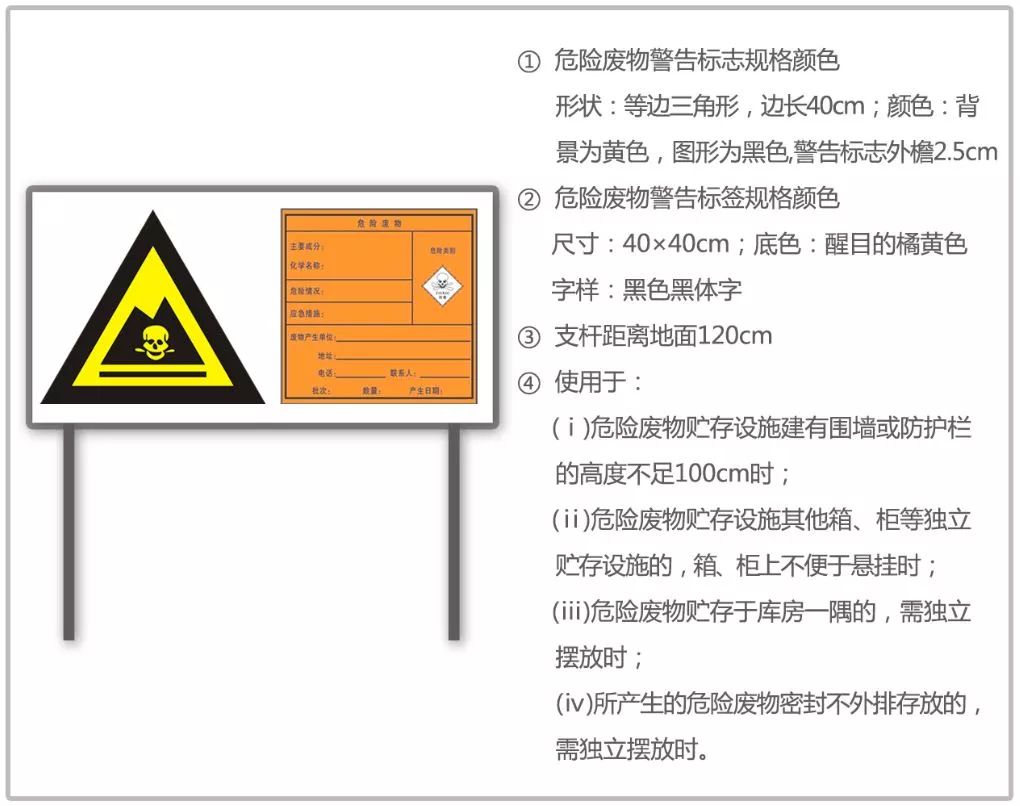
Set up hazardous waste identification signs at hazardous waste storage sites (hazardous waste identification signs and labels must be set up at the same time)
Suitable for indoor and outdoor hazardous waste warning signs and hazardous waste label style 1
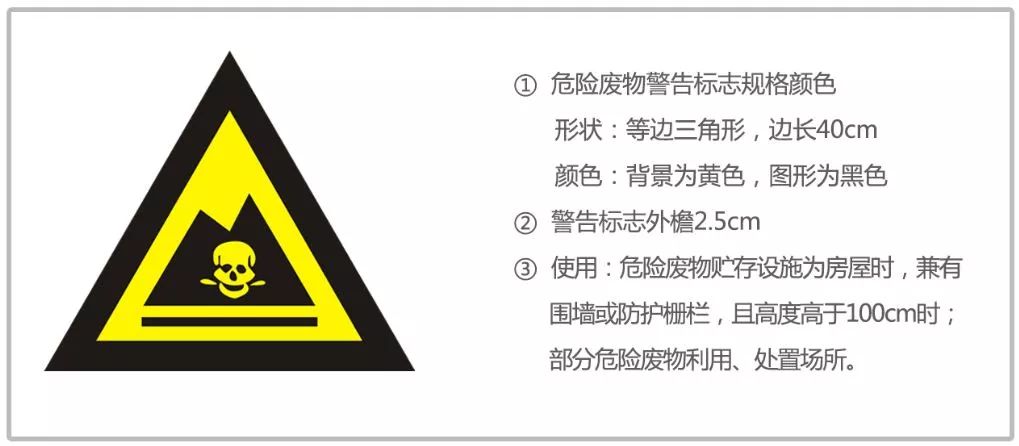
Suitable for indoor and outdoor hazardous waste warning signs and hazardous waste label style 2
2、Hazardous waste containers and packaging must be marked with hazardous waste identification signs
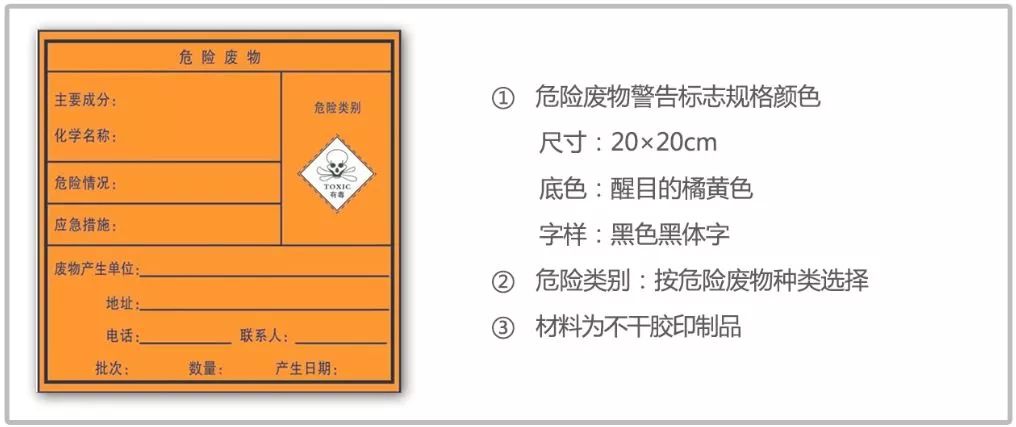
concentrate:There are a total of 8 types of hazardous waste markers,Only the more commonly used "toxic" hazardous waste labels are listed,And "harmful"、Identification of hazardous waste types such as "corrosive".,For details, please refer to Appendix A of the "Pollution Control Standards for Hazardous Waste Storage" (GB18597).,Select the corresponding hazardous waste type identification according to the type of hazardous waste。
source:Environmental protection of enterprises and institutions Environmental protection 365
statement:This website is reprinted、share、statement、Views remain neutral,The purpose is only to convey more information,The copyright belongs to the original author。If the copyright of the work is involved,Please contact us,We will remove the content as soon as possible!